

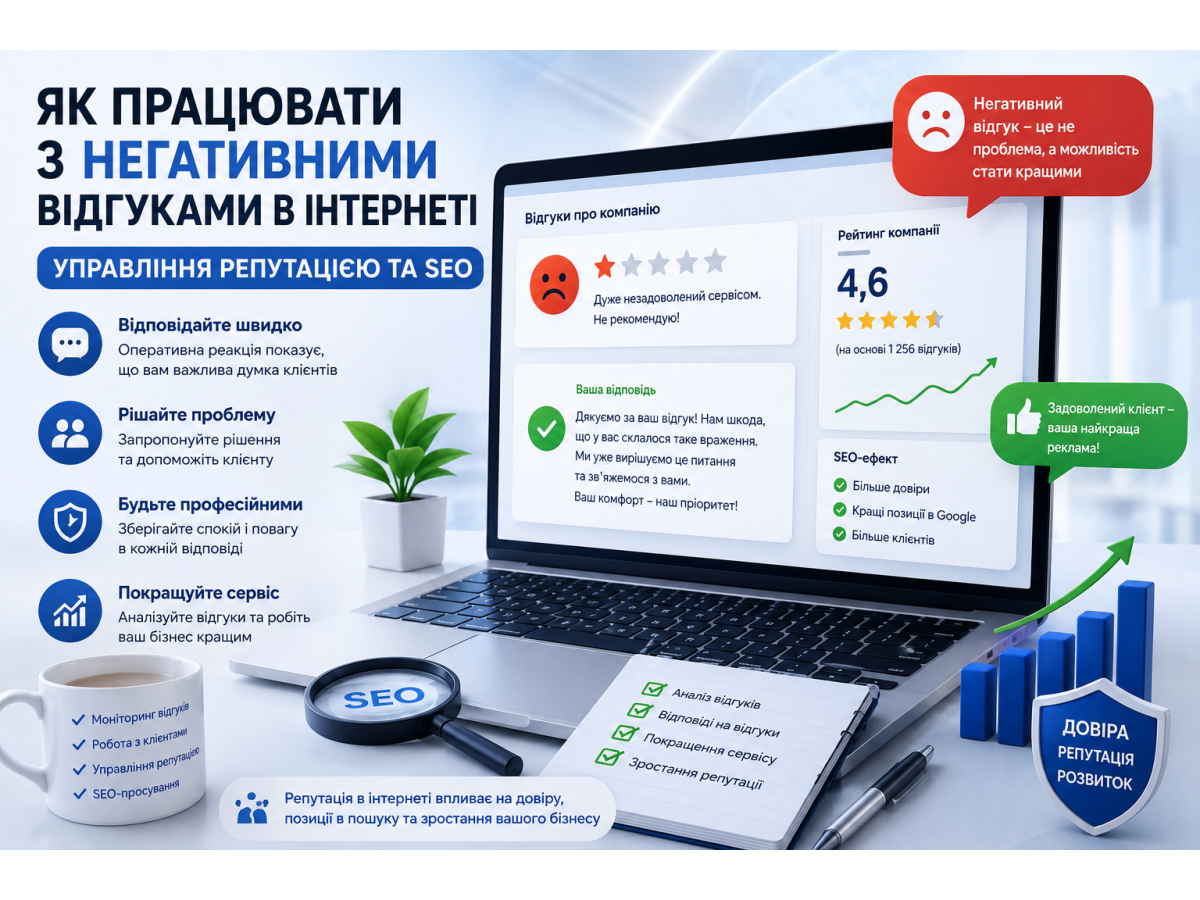
Negative reviews online directly affect customer trust, website conversions, and the overall visibility of a business in Google search. Before contacting a company or making a purchase, users often check reviews, ratings, and how the business responds to criticism.
Professional reputation management is not about hiding problems. It is about responding correctly, solving issues, improving service quality, and showing potential customers that the company takes feedback seriously.
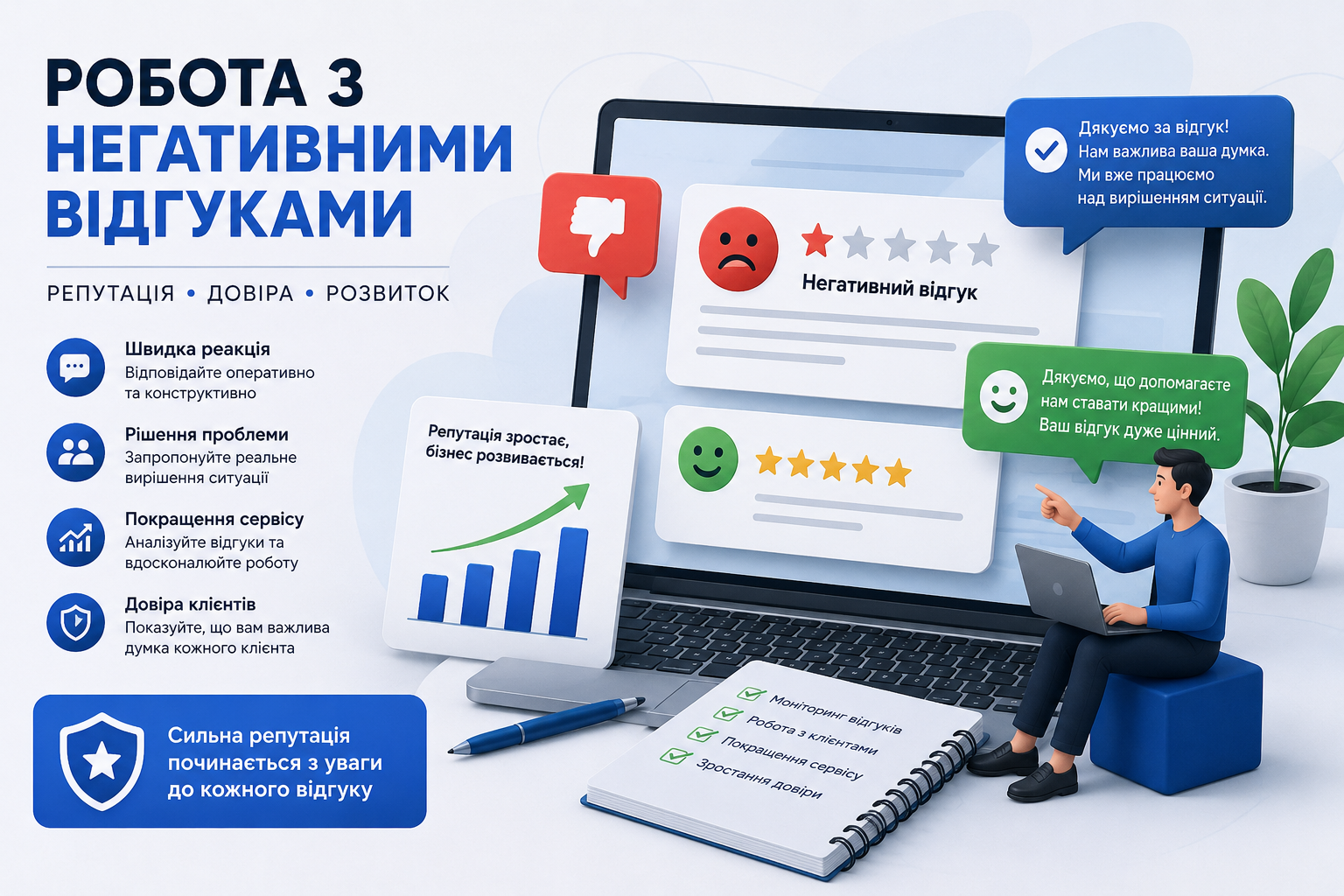
Why Negative Reviews Matter for Business
Many companies underestimate how strongly reviews influence customer decisions. A potential client does not only look at the rating. They also pay attention to whether the business responds, how it handles complaints, and whether it is ready to solve real problems.
This is especially important for service businesses, e-commerce projects, local companies, medical services, repair shops, restaurants, real estate agencies, and B2B companies where trust is a key factor in decision-making.
Negative reviews can lead to:
- lower trust in the brand;
- fewer calls, leads, and inquiries;
- lower website conversion rate;
- weaker local SEO performance;
- reduced advertising efficiency;
- higher customer acquisition costs.
Main Types of Negative Reviews
How to Respond to Negative Reviews Correctly
The biggest mistake a business can make is responding emotionally. A rude or defensive reply can damage the company’s reputation more than the negative review itself. Your response is not seen only by the reviewer — it is also read by future customers.
What to Pay Attention To
If a negative review is based on a real issue, the goal is not just to reply publicly. The company should also fix the root cause. Customers quickly notice when a business works only on its image but does not improve its service.
How Negative Reviews Affect SEO
Reviews play an important role in local SEO. Google considers ratings, review volume, user activity, and business responses when evaluating local relevance and trust. This is especially important for companies that rely on Google Maps, local search, and commercial queries.
Reputation management should work together with technical SEO, content marketing, link building, and conversion optimization. At SEO Expert , reputation management is considered an important part of a complete digital growth strategy.
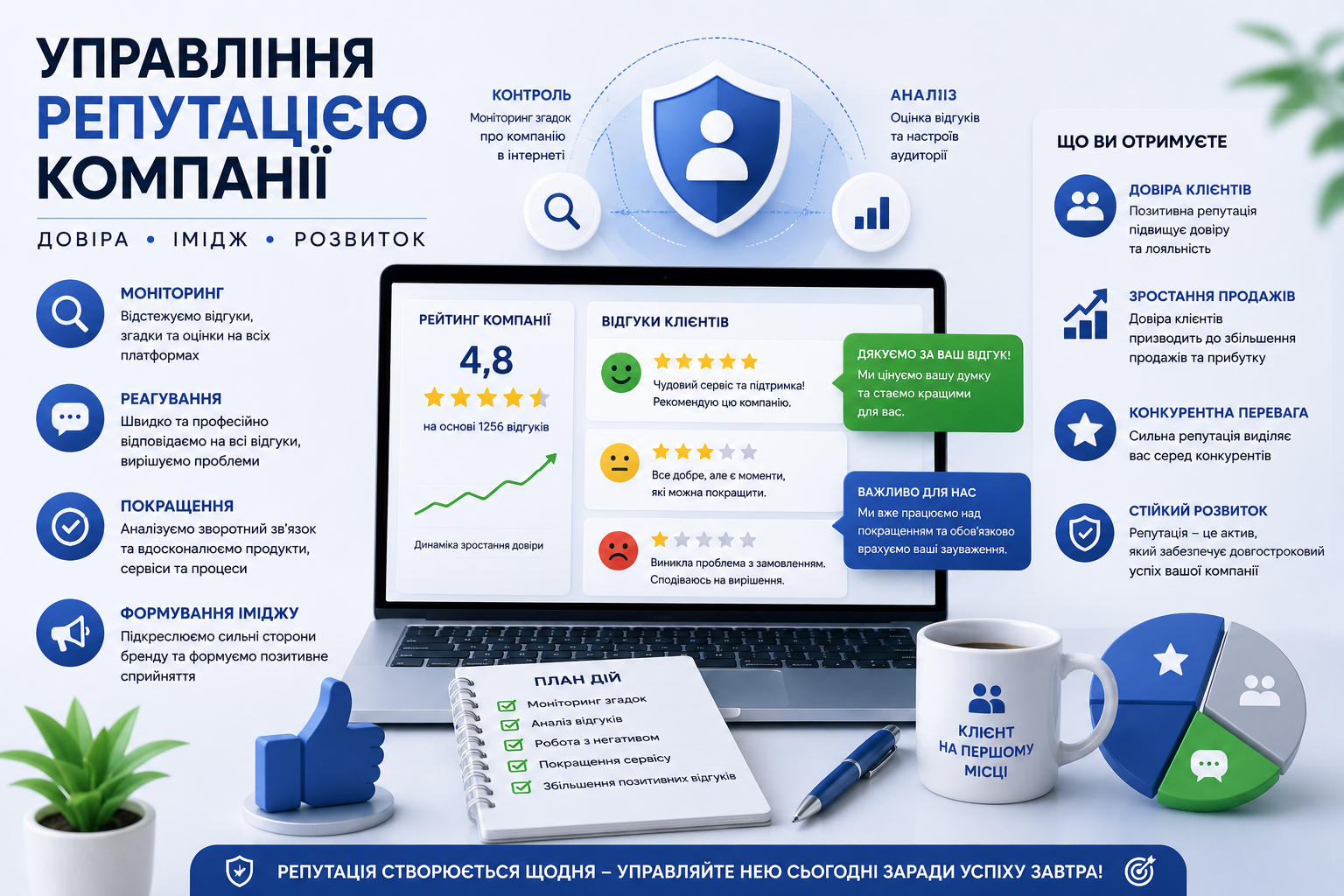
How to Build a System for Reputation Management
- monitor reviews on Google, social media, and industry platforms;
- create clear rules for responding to customer feedback;
- collect positive reviews from satisfied clients;
- track service quality and repeated complaints;
- conduct reputation audits;
- analyze customer pain points;
- connect reputation work with local SEO.
Professional SEO promotion is difficult to separate from online reputation. Users evaluate a business not only by its website, but also by reviews, ratings, brand mentions, and how the company communicates with customers.
Conclusion
Negative reviews are not only a risk for a company’s reputation. They are also a valuable source of information for improving service, communication, and customer experience. A business that responds professionally to criticism can strengthen trust and reduce the impact of negative feedback.
A systematic approach to reputation management helps protect the brand, improve local visibility, increase conversions, and support long-term SEO results.
Need a consultation?
If you need help with SEO promotion, website audit, reputation management, or choosing the right digital growth strategy, you can request a consultation.
Request a consultation