


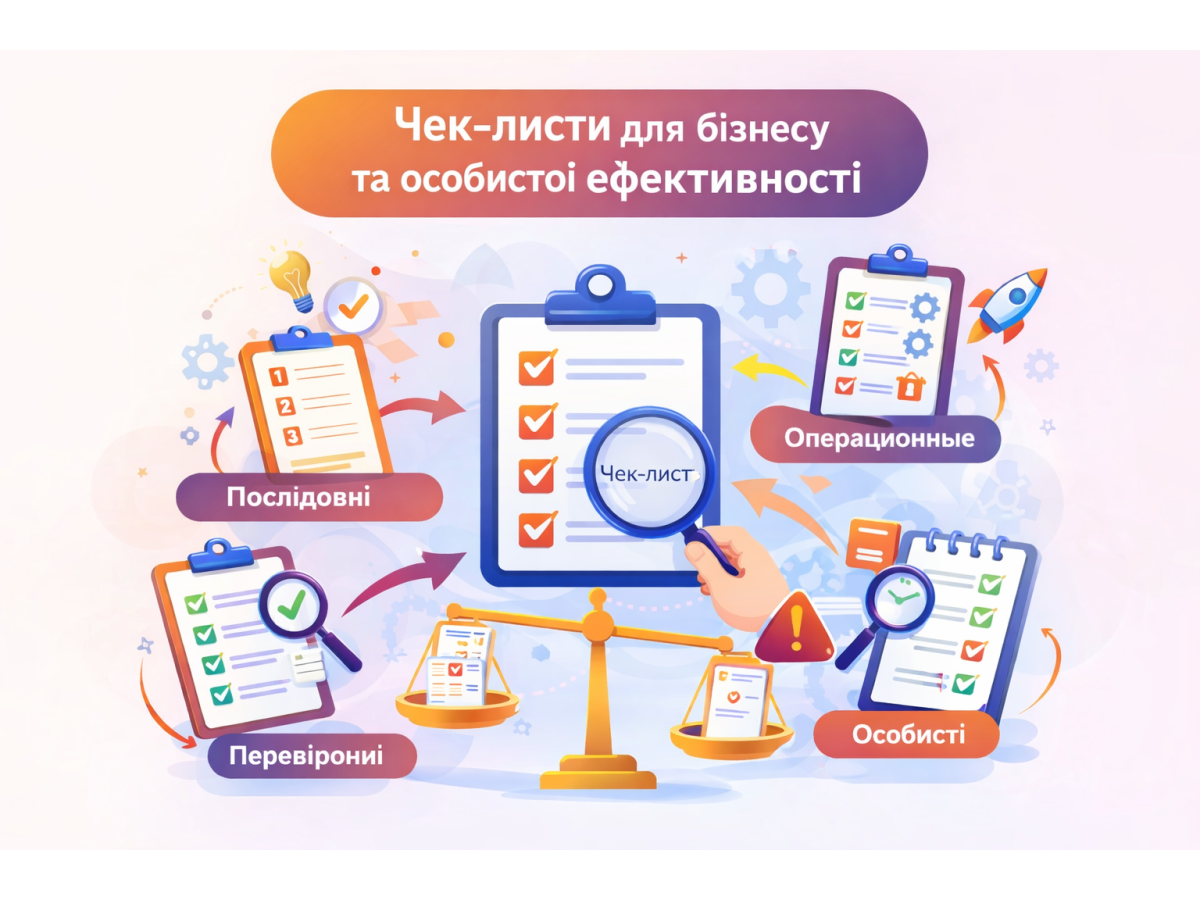
Checklists for business and personal productivity are one of the simplest yet most effective tools for task management. They help structure workflows, reduce the number of errors, and ensure consistent execution of recurring actions.
In business, checklists are used to manage projects, control the quality of employees' work, launch marketing campaigns, and develop websites. This approach allows complex processes to be transformed into a clear sequence of actions.
Checklists are especially widely used in digital marketing, SEO, and online project management, where every stage of work must be performed systematically.
Need a consultation?
If you need help with SEO optimization, a website audit, or choosing the right promotion strategy, request a callback and we will contact you shortly.
Request a callbackTypes of Checklists
Checklists may differ depending on how they are used and what purpose they serve. Depending on the goal, they can help control processes, analyze results, or manage daily productivity.

In practice, checklists are most often divided into several main types:
- sequential — help perform tasks in the correct order;
- verification — used to control quality;
- operational — applied to perform work processes;
- procedural — define standards for completing tasks;
- control — used to analyze results;
- personal — help manage personal productivity.
In real business projects, several types of checklists can be used simultaneously. For example, when launching a website, a sequential checklist is used for development, an operational checklist for marketing activities, and a control checklist for analyzing performance.
Example of a Business Checklist
In online projects, checklists are often used during the launch and development of a website. Below is an example of a workflow structure commonly used in search engine optimization.
| Stage | Task | Goal |
|---|---|---|
| Analysis | Research niche and competitors | Define the SEO strategy |
| Semantics | Collect keyword queries | Identify user demand |
| Technical Optimization | Check indexing and errors | Fix technical issues on the website |
| Content | Create optimized pages | Increase website relevance |
| Link Strategy | Build a backlink profile | Increase domain authority |
This structure is commonly used within comprehensive SEO services, where each step is performed sequentially and monitored using checklists.
Advantages and Risks of Using Checklists
Despite their simplicity, checklists significantly impact work efficiency. They help standardize processes and improve discipline in task execution.
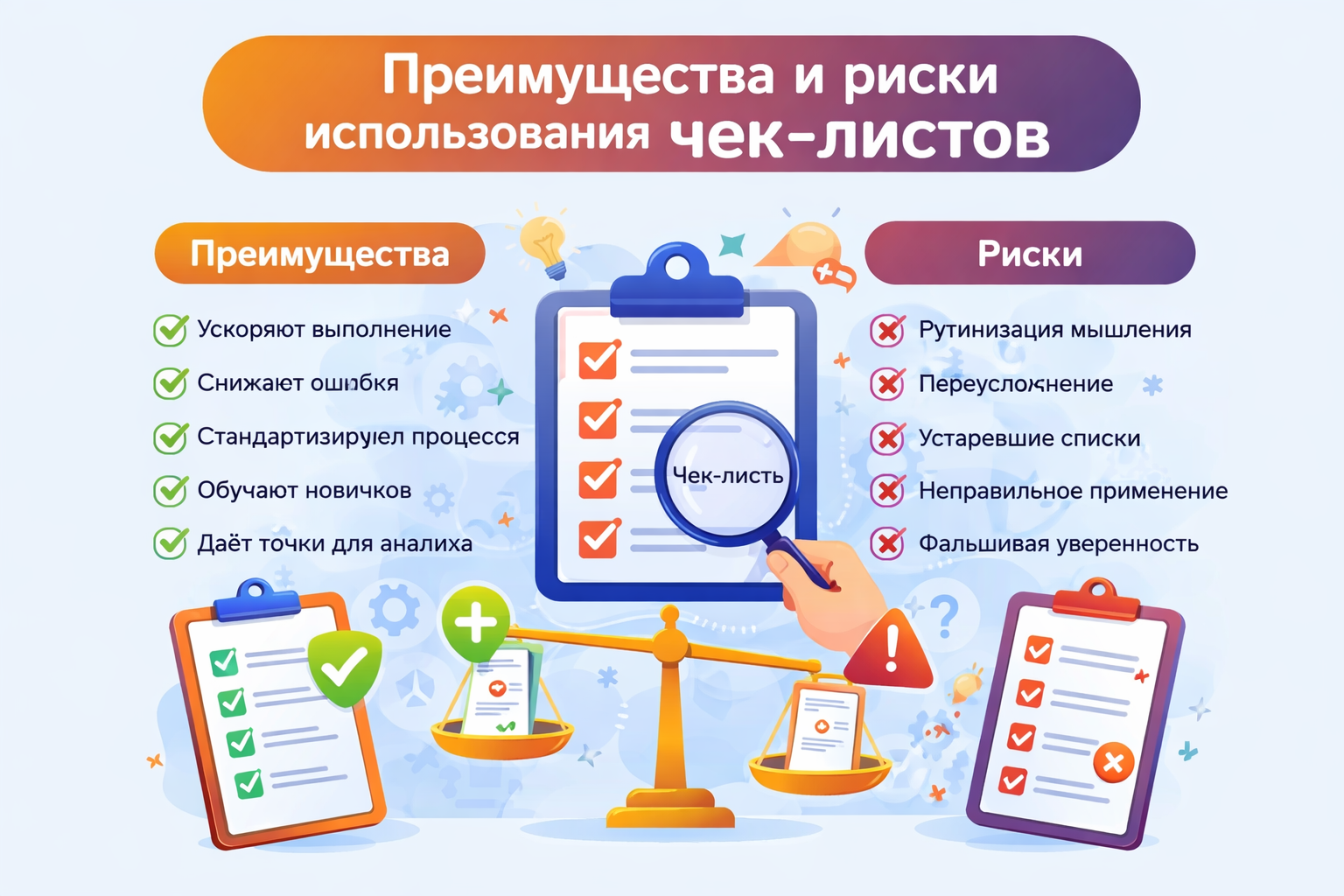
Main advantages of checklists:
- speed up task completion;
- reduce the number of mistakes;
- help standardize work processes;
- simplify onboarding of new employees;
- allow analysis of work efficiency.
However, incorrect use of checklists can also create certain limitations. For example, excessive detailing of processes may complicate workflows or create unnecessary bureaucracy.
How Checklists Are Used in SEO
In SEO, checklists are used at almost every stage of work. They help systematically control tasks and ensure stable results.
Checklists are commonly used for:
- technical website analysis;
- monitoring on-page optimization;
- checking site structure;
- analyzing backlink profiles;
- tracking search engine rankings.
Before starting SEO promotion, a comprehensive SEO audit is usually performed, which includes dozens of technical and analytical checks.
Within professional SEO services, checklists help control all stages of work — from project analysis to scaling the promotion strategy.
Conclusion
Checklists for business and personal productivity are a practical task management tool that helps organize workflows in a systematic way.
They reduce errors, speed up task completion, and increase overall team efficiency.
If you need to define a website development strategy, analyze a project, or build a structured SEO promotion process, professional consultation and a comprehensive audit can help create an effective action plan.