


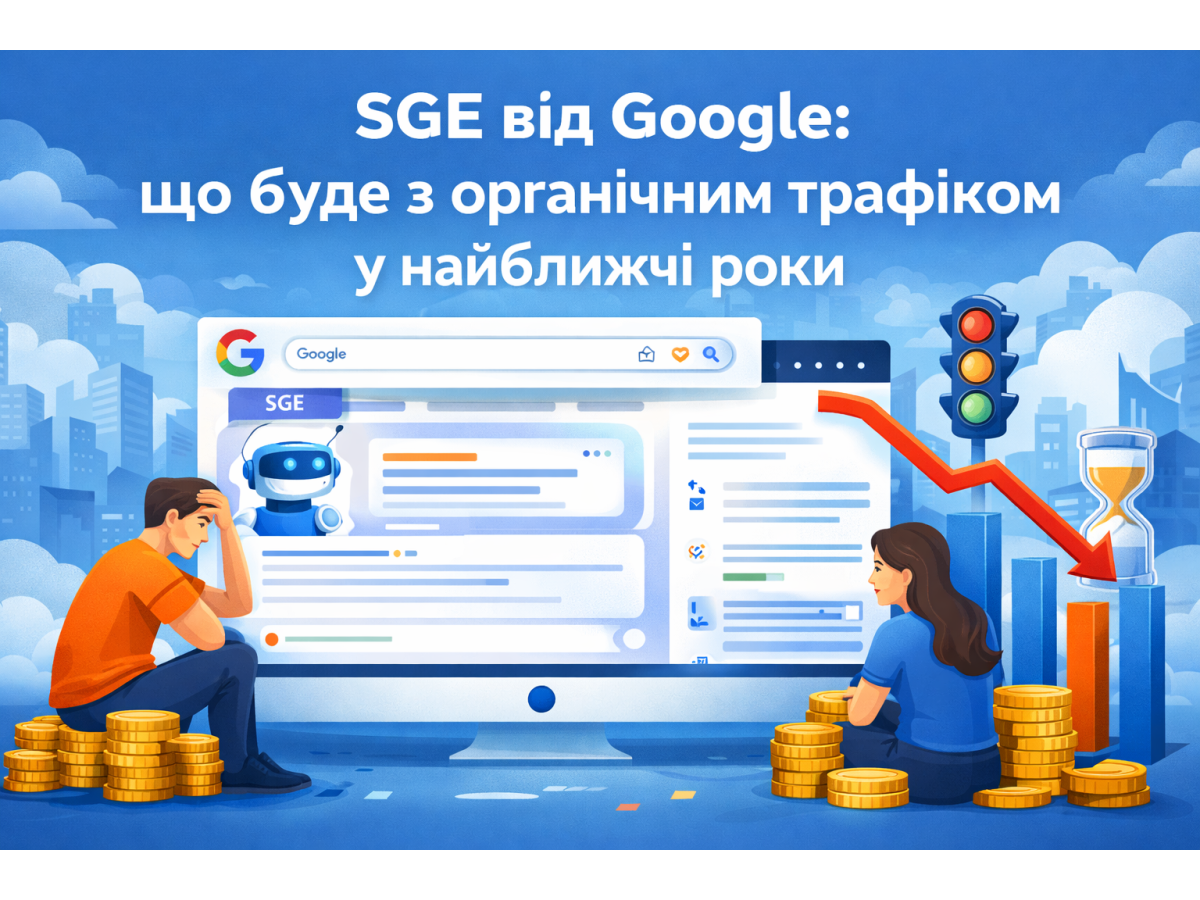
SGE by Google (Search Generative Experience) represents a new stage in search evolution, where artificial intelligence generates answers directly within search results. For businesses and SEO specialists, this means a fundamental shift in how organic traffic is distributed. Users can now get answers without visiting websites, which directly impacts click behavior and visibility.
In this article, we analyze how SGE affects organic traffic, what risks and opportunities arise, and which SEO strategies will remain effective in the near future.
What is SGE and How It Changes Search
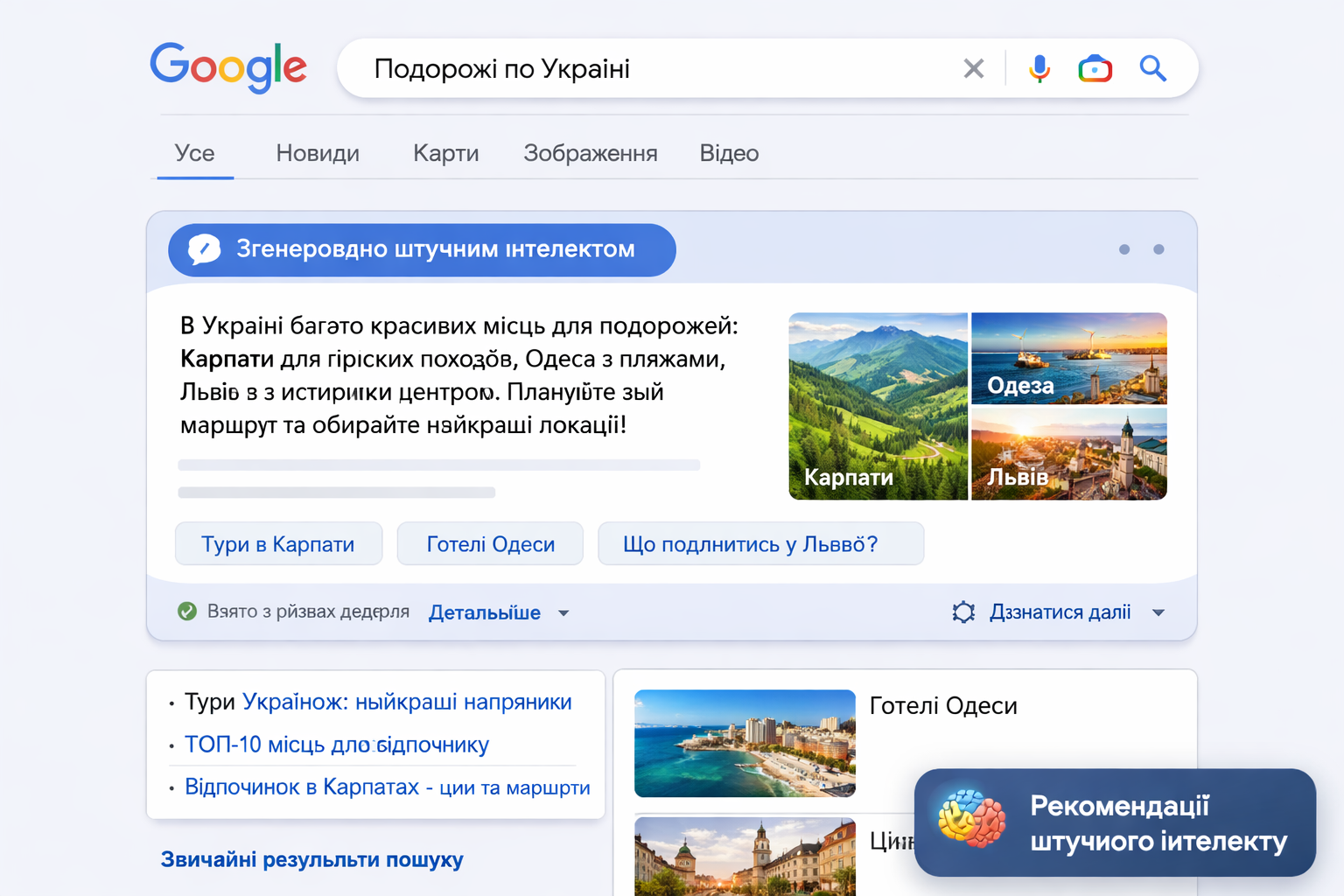
SGE integrates generative AI directly into search results. Instead of a traditional list of links, users see a summarized answer compiled from multiple sources.
Key changes include:
- reduced clicks on informational queries;
- increased importance of brand authority and trust;
- shift from rankings to visibility within AI-generated answers;
- greater emphasis on expert-level content.
How Organic Traffic Will Change
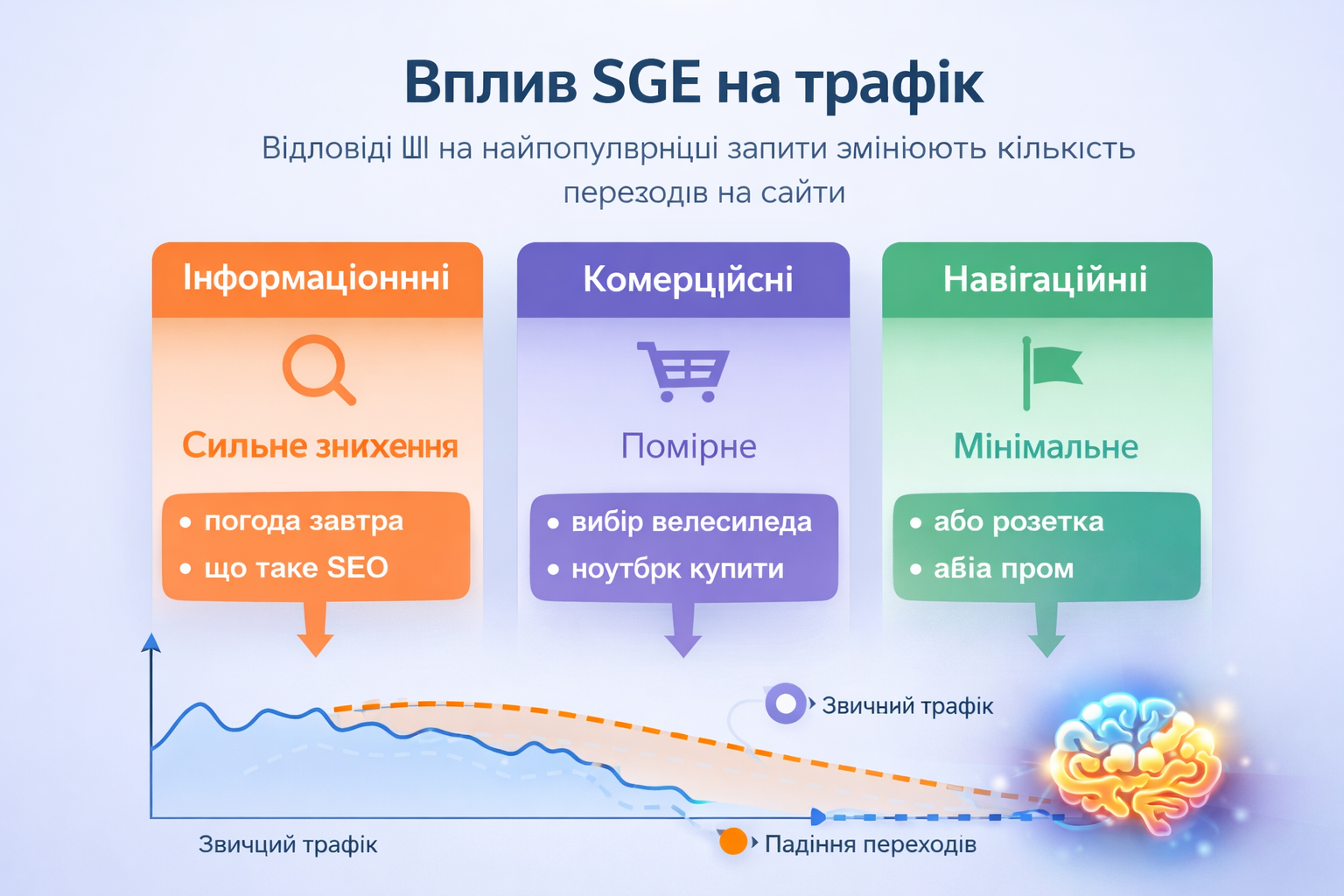
Organic traffic is not disappearing, but its structure is evolving. Informational queries are the most affected, while commercial intent queries remain relatively stable.
| Query Type | SGE Impact | Explanation |
|---|---|---|
| Informational | High decline | Answers are shown directly in SERP |
| Commercial | Moderate | Users still compare options |
| Navigational | Minimal | Users go directly to a brand |
The key takeaway: SEO as a channel is not declining — low-depth informational traffic is.
Why SEO Is Not Going Away
SGE does not generate answers from nothing — it relies on websites as sources. This makes high-quality content even more critical.
Key factors gaining importance:
- expertise and trust (E-E-A-T);
- content depth and completeness;
- clear structure and readability;
- behavioral signals;
- brand recognition.
Websites remain essential — they become the foundation for AI-generated answers.
Which SEO Strategy Will Work
Traditional keyword-focused SEO is becoming less effective. A more comprehensive approach is required.
1. Semantic Expansion
Instead of targeting individual keywords, it is necessary to cover entire topic clusters. SGE prioritizes sources with full topic coverage.
2. Intent-Based Content
Content should solve specific user problems rather than simply include keywords.
3. Strengthening Commercial Pages
- well-structured pages;
- clear answers to user questions;
- comparisons and value propositions;
- real cases and trust elements.
You can see an example on the SEO services page.
4. Brand Development
The more your brand is mentioned across the web, the higher the chance it appears in SGE responses.
5. Technical SEO
Page speed, structured data, and a clean architecture are fundamental for being included in AI sources.
What to Focus on Now
- reassess the role of informational content;
- focus on commercial pages;
- increase content expertise;
- develop blog content based on real user queries;
- build trust and brand authority.
Outlook for the Market
SGE is being gradually implemented, but its impact will continue to grow. This creates an opportunity for websites that adapt early.
Projects with strong structure, deep semantic coverage, and high-quality content will gain visibility both in traditional search and AI-generated results.
Conclusion
SGE by Google does not eliminate organic traffic — it reshapes it. Informational queries lose clicks, while commercial SEO and expert content become more valuable.
In this new environment, websites that solve real user problems and build trust will outperform competitors. This requires a systematic SEO approach and strategic planning.
If you need to adapt your website to the new search landscape, conduct an audit, or build a strategy — explore our approach on the https://seo-expert.com.ua/en.
Need a consultation?
If you need help with SEO, a website audit, or choosing the right strategy, request a callback and get professional guidance.
Request a callback